-
سوئیچ راکر یک قطعه کنترل دستی جمع و جور و آسان برای کار است. محرک منحصر به فرد آن به سبک راکر، همراه با عملکرد �...View More >>
-
سوئیچ میکرو یک کلید مکانیکی کوچک با مکانیزم عمل سریع است که به طور گسترده در لوازم خانگی، اتوماسیون صنعتی، ا�...View More >>
-
کلیدهای فشاری به طور گسترده در سیستم های کنترل مختلف با طراحی ساختاری متنوع، انتخاب مواد با مقاومت بالا و عم�...View More >>
-
ساختار داخلی سوئیچ کلید پیانو عمدتاً از طراحی مکانیکی یا لمسی سبک استفاده می کند. برخی از مدلهای پیشرفته از...View More >>
-
کلید دنده کالسکه کودک محصولی نوآورانه است که به طور مستقل توسط شرکت ما توسعه یافته است. ما برای ثبت اختراعات �...View More >>
-
سوئیچ دستگیره از ساختار تماس چرخشی با حساسیت بالا استفاده می کند که عملکرد صاف و موقعیت یابی واضح دارد و از د�...View More >>
-
کلید ماشه KM یک کلید جهانی با جریان بالا است که برای ابزارهای برقی با قدرت بالا طراحی شده است، با ظرفیت حمل جری...View More >>
-
سوئیچ کنترل درب که به عنوان سوئیچ مغناطیسی در یا سنسور وضعیت درب نیز شناخته می شود، یک جزء الکتریکی کلیدی است...View More >>
-
دسته سیم یک مجموعه سیم کشی کلی است که چندین سیم، کابل، پایانه و کانکتور را با توجه به طراحی الکتریکی خاص و الز...View More >>
-
برد کنترل PCB یکی از اجزای اصلی ضروری در دستگاه های الکترونیکی مدرن است. به عنوان مغز سیستم کنترل، به طور گسترد...View More >>



 EN
EN

اخبار
 صفحه اصلی / اخبار / اخبار صنعت / Everything You Need to Know About Trigger Switches: Types, Uses, and How to Replace Them
Everything You Need to Know About Trigger Switches: Types, Uses, and How to Replace Them
 2026.04.13
 اخبار صنعت
What Are Trigger Switches and How Do They Work?
A trigger switch is a type of electrical switch that activates a circuit when a lever, finger trigger, or actuator is pressed — similar to how a gun trigger operates. Instead of a simple push button or toggle, trigger switches use a pivoting mechanism that gives the user more control over when and how firmly the switch engages. They're widely used in power tools, industrial machinery, handheld devices, and consumer electronics because they allow for variable-speed control, ergonomic operation, and precise activation. Understanding how they function is key to choosing the right one for your application.
At their core, trigger switches work by completing or interrupting an electrical circuit through mechanical movement. When you squeeze the trigger, it pushes internal contacts together, allowing current to flow. Release it, and a spring mechanism returns the trigger to its default open position, cutting power. More advanced models incorporate variable resistance or potentiometer-based systems that modulate power output based on how far the trigger is depressed — this is what gives power drills their variable speed function.
Common Types of Trigger Switches
Trigger switches come in several configurations depending on the application, current rating, and control style required. Knowing the differences helps you match the right switch to your specific use case.
Single-Speed Trigger Switches
These are the simplest type — press the trigger, the device runs at full power; release it, and it stops. There's no middle ground. You'll find single-speed trigger switches in basic power tools like jigsaws, rotary tools, and some older drills. They're reliable, low-cost, and easy to replace, but they don't offer any nuanced control over output.
Variable Speed Trigger Switches
Variable speed trigger switches adjust motor speed or power output based on how far the trigger is squeezed. A light press delivers low speed; a full squeeze delivers maximum power. This is the most common trigger switch type found in cordless drills, circular saws, and angle grinders. They typically use electronic components like thyristors or MOSFETs to regulate power, and the trigger itself contains a speed-control potentiometer or Hall effect sensor.
Trigger Switches with Forward/Reverse
Many power tool trigger switches integrate a forward/reverse selector directly into the switch body. This combination unit controls both direction and speed from a single assembly, reducing the need for separate components. These are standard in cordless screwdrivers and reversible drills. The direction selector usually sits as a paddle or slide directly above or beside the trigger.
Lock-On Trigger Switches
Lock-on trigger switches allow the user to press the trigger and then engage a locking mechanism so the tool runs continuously without holding the trigger down. These are common in belt sanders, routers, and angle grinders used for extended periods. A separate button or slide lock engages after the trigger is depressed, and releasing the lock button returns the switch to its off state.
Momentary vs. Maintained Trigger Switches
Momentary trigger switches only stay active while being physically held down — release the trigger and power stops immediately. Maintained (or latching) trigger switches stay in the active position after being pressed until deliberately switched off. Most handheld power tools use momentary switches for safety, while some stationary or industrial setups use maintained switches for convenience in continuous operation.
Key Specifications to Understand Before Buying a Trigger Switch
Buying the wrong trigger switch can result in overheating, premature failure, or even safety hazards. Here are the most important specs to check:
| Specification | What It Means | Why It Matters |
| Amperage Rating | Max current the switch can handle | Undersized switches overheat and fail |
| Voltage Rating | Max voltage the switch supports | Must match your tool or system voltage |
| AC vs. DC | Type of electrical current | Corded tools use AC; battery tools use DC |
| Speed Control Type | Electronic or mechanical modulation | Determines variable speed capability |
| Terminal Configuration | Number and layout of wire terminals | Must match your tool's wiring setup |
| IP Rating | Dust and moisture resistance level | Critical for outdoor or industrial use |
Always cross-reference the original switch's part number when replacing one in an existing tool. Manufacturers often list compatible trigger switch models in their service manuals or on their websites.
Where Trigger Switches Are Used
Trigger switches appear in a surprisingly wide range of products. Understanding the application helps clarify which features matter most for each use case.
Power Tools
This is the most common home for trigger switches. Cordless drills, impact drivers, circular saws, reciprocating saws, jigsaws, and rotary tools all rely on trigger switches for on/off and speed control. Variable speed trigger switches are especially important here — they let users drive screws slowly for precision or ramp up to full speed for cutting, all with a single finger.
Industrial and Pneumatic Equipment
Air-powered tools like pneumatic nail guns, spray guns, and impact wrenches use trigger switches to control air valve actuation rather than electrical current. In industrial settings, heavy-duty trigger switches are built into control handles for machinery, conveyors, and actuators. These switches are rated for millions of cycles and built to withstand vibration, oils, and debris.
Consumer Electronics and Gaming
Game controllers use trigger switches extensively — the L2/R2 or LT/RT buttons on modern controllers are pressure-sensitive trigger switches that provide analog input. Some use Hall effect sensors for contactless, wear-free operation. Similarly, electric scooters, e-bikes, and handheld vacuum cleaners use trigger-style switches for throttle and power control.
Medical and Scientific Devices
Handheld medical instruments, surgical tools, and laboratory devices sometimes use trigger switches for activation. In these cases, the switch must meet strict hygiene, reliability, and precision standards. Sealed trigger switches with smooth surfaces that can be sterilized are often required.
How to Replace a Trigger Switch in a Power Tool
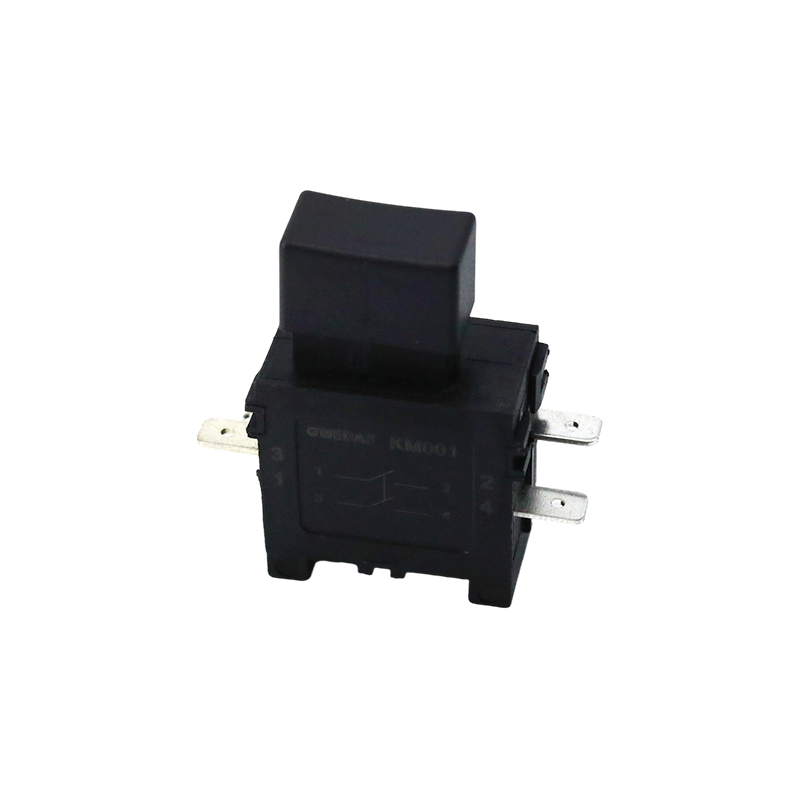
Replacing a faulty trigger switch is one of the most common DIY power tool repairs. If your drill only runs at full speed, won't turn on at all, or sparks when you squeeze the trigger, the switch is likely the culprit. Here's how to approach the replacement safely:
- Disconnect all power first: Remove the battery pack from cordless tools or unplug corded ones before opening the housing.
- Photograph the wiring before disconnecting: Take clear photos of the existing switch and wire positions so you can replicate the setup exactly when installing the new switch.
- Open the tool housing carefully: Most power tool handles are held together with Phillips or Torx screws. Keep screws organized by location since they may vary in length.
- Note the terminal layout: Trigger switches can have 2, 4, 6, or more terminals. Match the wiring configuration exactly — swapping wires on a reversible switch can change direction behavior.
- Use the OEM part number when possible: Aftermarket switches may fit physically but differ in resistance values or terminal spacing. OEM or equivalent-rated replacements are more reliable.
- Test before closing the housing: Reassemble loosely, reinsert the battery, and test the switch behavior before fully tightening the housing screws.
Signs Your Trigger Switch Needs to Be Replaced
Trigger switches don't last forever, especially in high-use tools. Recognizing early warning signs can save you from being stranded mid-project or — more importantly — prevent a safety incident.
- Tool only runs at full speed: The variable speed element has failed, and the switch is bypassing speed control entirely.
- Intermittent power: The tool cuts in and out as you squeeze — a sign of worn or dirty internal contacts.
- Sparking or burning smell: Electrical arcing inside the switch body indicates serious contact wear or a short circuit.
- Trigger feels loose or doesn't spring back: The mechanical return spring or pivot may be broken, leaving the trigger stuck or unresponsive.
- Tool won't turn on at all: After ruling out battery and motor issues, a dead trigger switch is a common cause of total power failure.
Trigger Switch Safety Considerations
Because trigger switches control power to motors, blades, and other hazardous components, safety is non-negotiable when selecting, installing, or replacing them.
Never Exceed the Rated Amperage
Running more current through a switch than it's rated for causes internal components to overheat, melt, or arc. Always match or exceed the original switch's amperage rating when selecting a replacement. For example, if the original switch is rated at 15A, don't substitute a 10A model even if it fits physically.
Use Proper Insulation and Connectors
When wiring a replacement trigger switch, use crimp connectors, heat shrink tubing, or soldering with proper flux — never just twist wires together and wrap them in tape. Loose connections create resistance, which generates heat and can cause failures or fires over time.
Be Cautious with Lock-On Features
Lock-on trigger switches keep a tool running without holding the trigger. This is convenient but also means the tool won't stop if you drop it. Always disengage the lock-on feature when moving between work positions, and never use lock-on mode on tools like angle grinders near people or flammable materials.
Comparing Top Trigger Switch Brands and What They're Known For
Several manufacturers specialize in or produce widely used trigger switch components. Here's a quick overview of what each is known for in the industry:
| Brand | Known For | Typical Use |
| Marquardt | High-cycle industrial trigger switches | Power tools, industrial equipment |
| Kedu | Affordable variable speed switches | Budget power tools, DIY repairs |
| Defond | OEM switches for major tool brands | Drills, saws, grinders |
| Omron | Precision micro trigger switches | Electronics, medical devices, gaming |
| Honeywell | Sealed, rugged trigger switches | Aerospace, industrial controls |
For straightforward power tool repairs, Kedu and Defond are widely available and cost-effective. For higher reliability or specialized applications, Marquardt and Honeywell are worth the premium investment.
Tips for Extending the Life of Your Trigger Switch
Trigger switches endure thousands of mechanical cycles over a tool's lifetime. A little maintenance goes a long way toward maximizing their service life.
- Keep dust and debris out: Use your tool with proper ventilation and avoid laying it trigger-side down in sawdust or grit. Debris entering the switch body causes contact wear and jamming.
- Avoid partial-trigger stalling: Running a motor at very low speed under heavy load — like driving a large screw very slowly — puts high current through the switch at a high-resistance setting, generating more heat than full-speed operation.
- Don't force a stiff trigger: If the trigger feels sticky or hard to press, investigate the cause before continuing use. Forcing it can crack the trigger body or damage the return spring.
- Store tools in dry conditions: Moisture corrodes internal contacts over time. Store power tools in a dry cabinet or case, especially in humid environments.
- Clean contacts if accessible: On some larger switches, internal contacts can be cleaned with electrical contact cleaner spray to remove oxidation and restore reliable conductivity.


الف سازنده کلید لوازم خانگی که به مدت 21 سال بر توسعه، تولید و فروش سوئیچ ها تمرکز کرده است.
لینک های محصولات
اطلاعات تماس
تلفن: +86-021-33752188
تلفن: +86-15902103688
ایمیل: [email protected]
[email protected]
[email protected]آدرس: شماره 580 جاده Shenzhou، منطقه Fengxian، شانگهای، چین

